
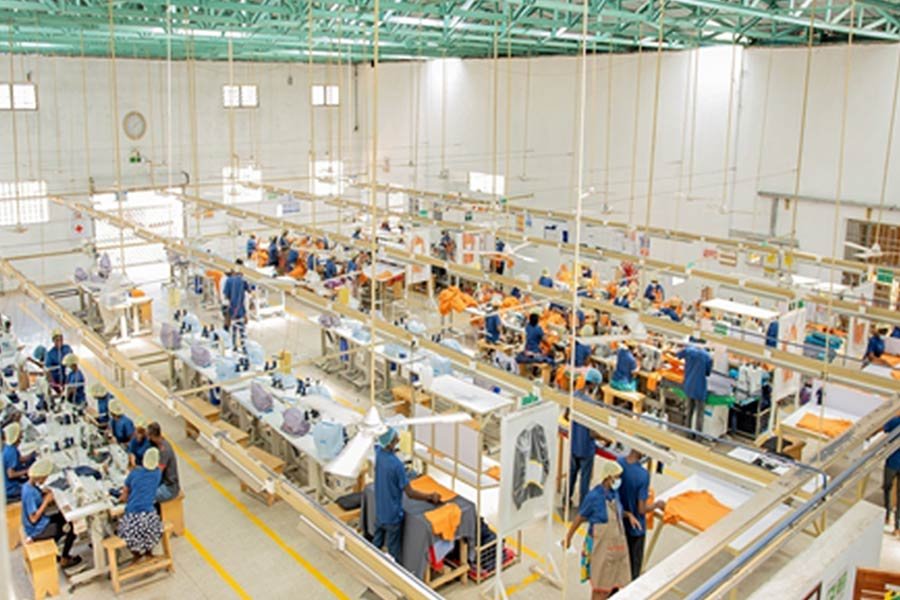
Ghana’s Apparel Manufacturing Sector Is at an Inflection Point
The global apparel industry is actively diversifying its supply chains — and West Africa is emerging as a serious destination for garment sourcing, private label production, and ethical manufacturing. For buyers, brands, and investors looking beyond Asia, Ghana offers a compelling case: competitive labor costs, AGOA-backed duty-free access to the U.S. market, and a growing base of capable garment factories.
At the center of this shift is CYNDEX Limited — a Ghanaian apparel manufacturer producing over 100,000 garments per month and exporting to the United States, with a workforce of 250+ employees and the infrastructure to scale.
But CYNDEX is more than a production facility. It is a model for what apparel manufacturing can do at the intersection of industrial growth, workforce development, and sustainable job creation in a developing economy.
Why Apparel Manufacturing Remains One of the Most Effective Job-Creation Industries
Across every market where it has taken hold — Bangladesh, Vietnam, Kenya, Ethiopia — garment manufacturing has proven to be one of the fastest, most scalable pathways out of unemployment. The reason is structural:
Apparel production is labor-intensive by design. Every stage of the process — fabric cutting, sewing, finishing, quality control, and packaging — requires human hands. Unlike capital-intensive industries that create few jobs per dollar invested, a functioning garment factory creates dozens of jobs per production line.
The skills barrier to entry is low — but the ceiling is high. Workers can enter the industry with minimal formal education and, through on-the-job training and apprenticeship, advance into skilled machine operation, quality assurance, pattern grading, and supervisory roles. This makes apparel manufacturing one of the few industries capable of absorbing Ghana’s growing youth labor force at scale.
The sector is inclusive by design. Women, youth, and individuals with limited academic credentials can all find structured, dignified employment in a garment factory — a rarity in formal sector hiring.
Ghana adds another advantage to this equation: AGOA (African Growth and Opportunity Act), which provides duty-free, quota-free access to the U.S. market for eligible Ghanaian exports. With AGOA renewed through December 2026, Ghanaian apparel manufacturers now have a critical window to scale production, attract sourcing orders from U.S. brands, and cement the country’s position as a competitive garment exporter.
CYNDEX Limited: A Full-Package Apparel Manufacturer Built for Export
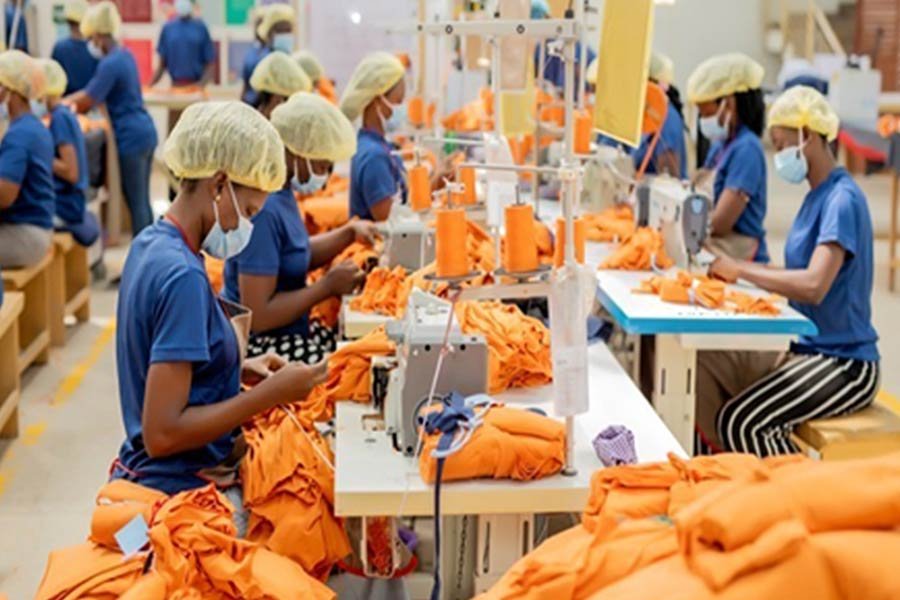
CYNDEX Limited is not a startup or a cottage industry. It is a structured, production-scale garment manufacturing company operating in Ghana with the capacity and compliance standards to serve international buyers.
Production Capacity
- Output: 100,000+ garments per month
- Workforce: 250+ employees across production, quality control, and operations
- Export markets: United States and international buyers
- Product categories: Cut-and-sew garments for retail, wholesale, and private label clients
This level of throughput places CYNDEX among Ghana’s capable industrial garment manufacturers — companies that can fulfill bulk orders with consistency, meet international quality benchmarks, and navigate the logistics of cross-border trade.
Workforce and Skills Development
CYNDEX employs seamstresses, tailors, industrial sewing machine operators, quality inspectors, and administrative staff. What distinguishes the company is its investment in human capital:
- Continuous training programs ensure workers develop specialized technical skills
- Internal promotion pathways allow entry-level workers to advance into supervisory and managerial roles
- On-the-job upskilling creates a workforce capable of meeting the quality demands of export-grade production
This approach directly addresses one of Ghana’s most persistent economic challenges: a workforce with energy and potential, but without access to structured technical development.
AGOA and Ghana’s Apparel Export Opportunity: Why Now Matters
For international buyers and sourcing managers, understanding the Ghana garment manufacturing landscape requires understanding AGOA.
The African Growth and Opportunity Act — renewed through December 2026 — allows eligible Ghanaian apparel to enter the United States duty-free and quota-free. For buyers sourcing from Ghana, this means:
- Lower landed costs compared to tariff-paying competitors in Asia
- Supply chain diversification away from concentrated sourcing regions
- ESG-aligned sourcing from a country with improving labor standards and ethical manufacturing credentials
For Ghana-based manufacturers like CYNDEX, AGOA is a direct growth catalyst. Every additional export order means additional production runs — and additional hires.
Industry leaders have described the current AGOA window as one of the most important in the sector’s history. Competitors like Kenya have used similar trade access to grow apparel exports to over $600 million annually. Ghana’s manufacturers, with the right scale and capability, are positioned to follow that trajectory.
Ethical and Sustainable Apparel Manufacturing in Ghana
As global brands face increasing pressure from consumers, investors, and regulators to demonstrate ethical sourcing practices, the question of where and how garments are made has never been more commercially important.
CYNDEX operates with a commitment to:
- Fair labor practices aligned with international standards
- Safe, compliant working conditions across all production areas
- Employee well-being as a core operational value — not a compliance checkbox
For sourcing managers and brand buyers evaluating African apparel manufacturers, these commitments matter. Sustainable garment production is no longer a niche preference — it is a baseline expectation from major retailers, certification bodies, and ethical fashion consumers worldwide.
Why Investors and Policymakers Should Prioritize Ghana’s Garment Manufacturing Sector
Ghana’s unemployment rate — particularly among youth — represents both a social challenge and an economic opportunity. Thousands of young people enter the labor market each year. The formal economy cannot absorb them at the required pace through traditional channels alone.
Garment manufacturing offers a solution that is:
- Scalable: A single factory can grow from 50 to 500 workers with the right orders and investment
- Relatively low in capital barriers: Compared to heavy manufacturing or tech, garment production can be established with achievable startup costs
- Globally connected: Export-oriented production links local workers directly to international value chains
- Inclusive: Women and youth — often the most economically vulnerable — are the primary beneficiaries
CYNDEX Limited is proof of concept. From its origins as a smaller operation, it has grown into an enterprise capable of producing for the American market at volume. Scaled across the sector, this model has the potential to meaningfully reduce unemployment, generate foreign exchange, and anchor Ghana’s industrial base.
Frequently Asked Questions: Apparel Manufacturing in Ghana
What types of garments does CYNDEX Limited produce?
CYNDEX produces a range of cut-and-sew garments including items for retail, wholesale, and private label programs, with production capacity exceeding 100,000 units per month.
Can Ghanaian garment manufacturers export to the United States?
Yes. Under AGOA (African Growth and Opportunity Act), eligible Ghanaian apparel enters the U.S. market duty-free and quota-free. CYNDEX already exports to the United States.
Is Ghana a viable alternative to Asian sourcing for apparel brands?
For brands prioritizing supply chain diversification, ethical sourcing, and ESG compliance, Ghana presents a credible option — particularly for buyers already working with or interested in African manufacturing.
How many jobs does the garment industry create in Ghana?
A single mid-sized factory like CYNDEX employs 250+ workers directly, with significant additional indirect employment created through supplier and logistics networks.
What is the lead time for garment production in Ghana?
Lead times vary by order volume and product type. Ghana-based manufacturers are increasingly competitive on turnaround times for standard cut-and-sew programs.